Wednesday, June 15, 2011

Don Raaaaamiiiiiiro

As I wait for my child by the entrance of our apartment building, I notice Don Ramiro walking out. The eighty-year old man in his pressed suit and tie, heads off to whatever pretend job he goes to, the kind where the “girl” fetches him coffee while he does the crossword puzzles and plans his lunch dates with his Franco-era cronies.

Is the middle-aged man deferentially following Don Ramiro a new man-servant? Could the old codger be getting more feeble? I discuss it with my husband. He’s doubtful “Nah, the bad ones hang on forever. Their toxic personality acts as a preservative.” I have another theory. “Maybe they’re secretly afraid of Hell?”

Don Ramiro is a machista who thinks he’s a gentleman. He feels immensely superior to women and to foreigners. He hates children. He has neither manners, nor education, nor culture, nor any professional distinction that I’ve heard of. He did, however, have enough common sense to marry the daughter of a president of a national bank. This means that he manages his wife’s inheritance, which includes three apartments in our building. No self-respecting third world dictator presiding over his domains takes himself more seriously than Don Ramiro executing his responsibilities as head of the Building Association of Serrano XX.

In this capacity, he once dragged us to court and tried to kick us out of the building on the grounds that our uncivilized American habits caused us to wake up too early in the morning (7am) and our children made too much noise.

Don Ramiro, if we have to leave this building, I hope the next tenant is an Arab or African soccer player. If it’s a childless Spanish couple. I hope they have lots of parties, smoke crack and play really loud music. I hope the next renter decides to use the apartment as the locale for his thriving Casa Putas. Don Ramiro, when you get older and more infirm, I hope the poor third world woman taking care of you isn’t very nice. I hope she forgets to change your diapers and lets you sit in them. I hope you sit there powerless in your wheelchair while she watches her favorite telenovelas every time there’s a Clasico or Champion’s League soccer game on TV.

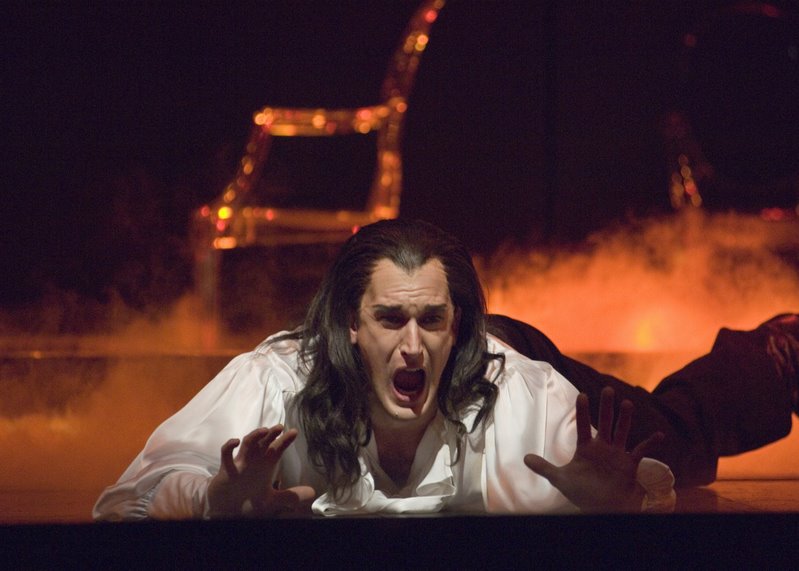
And when it’s your time, I hope the chasm of Hell opens up and the demons drag you down while the orchestra plays the finale of Mozart’s Don Giovanni.

Friday, May 27, 2011

Trebuchet

Dear God,
When it comes time for my 8-yr old son to take the SATs, in about nine years from now, could you please do me a favor and make sure it includes the word “trebuchet”? He has not sat down at the piano willingly to practice at any time this year, except for 7:30 the morning…after his 12-year old sister’s sleep-over party…when the girls had gone to bed at 3 am. When this failed to impress the girls, he and his twin moved on to streaking.

However, he has a very impressive knowledge of medieval siege engines due to many school bus hours playing Age of Empires, Age of Kings on the Nintendo DS. I believe this is teaching him some basic notions of cash flow, as well. Recently, he learned that his feudal village rents were not bringing in enough income to support his war-mongering proclivities. He has an impressive smattering of Roman military knowledge (Thank you Astérix! ) and can describe the Siege of Gondor (Lord of the Rings) at length.

Sometimes we non-tiger mothers need a break.

Nathalie

Monday, May 23, 2011

Dear Sexist Media,


Can we please have more photos of these fellows shirtless please?

Cause when you look like this,


and you’re not as smart as him (Dial a hooker),
then maybe you have to stoop to assaulting the woman who cleans your toilet and changes your bed linens.

In the words of French electropop singer and sometime philosopher Yelle:

…Alors les filles on se promene
Ouais on va aux chippendales
On navait pas prevu de passer la soiree avec des rigolos
On voulait voir des pectoraux, des mecs montes comme des taureaux...
Yelle, Je Veux Te Voir

Thursday, May 19, 2011

Difference in French, American Attitudes comes to forefront in DSK Arrest

It's hard to miss the culture clash in the differing coverage the American, British and French press give the arrest of Dominique Strauss-Kahn (DSK), the French IMF-head who was arrested in New York city after allegedly sexually assaulting a hotel maid.

The French journalists and public are particularly upset about the perceived lack of dignity with which Strauss-Kahn is being treated. They feel the pictures of him, unshaven and unkempt and handcuffed after his night in jail, are degrading to his individual dignity. They proudly point to French laws that forbid photographing suspects before they have been formally convicted of a crime. They feel that allowing journalists in the courtroom, undermines the legal process and turns the proceedings into a media circus.

The Americans, and to a lesser degree the British, feel the French press is to blame for a so-called "conspiracy of silence" that protected a "sexual predator." The French respond that the private sex lives of public figures are not their concern unless this somehow unduly impacts the manner in which those public figures perform the jobs they were elected to fulfill. For instance, not interested that former French president, Mittérand had a long-standing mistress and a love-child. If he had been using public funds to maintain his mistress and love child it would have been another story.

Apparently, DSK's third wife, Anne Sinclair, is not bothered by her husband's reputation for running after women. In public, she proclaims that she is proud of it and that it is "important for a politician to be able to seduce." I agree with the French press' restraint in reporting on this aspect of politician's lives. However, they need to understand that if the US press seems to go too far in the other extreme, it is because American politicians, are held to a different standard. In the US, for better or worse, demonstrating an upstanding personal life is part of how many politicians, especially those of the conservative Republican stripe, sell themselves to the American people. So it does make sense, that if the politician has campaigned on a "family-values" platform, which, in the US, means marital fidelity, or supports a very anti-gay conservative platform, then is revealed in the act of picking up men in airport restrooms, it makes sense to expose them. Meanwhile in the case of US politicians who did not campaign on the conservative "family values" platform or pretend in anyway that their personal life was a mirror for their qualities in government, I feel we should leave their private lives alone. While I did not like his equivocation on a lot of other issues, I never felt Bill Clinton's relationship with Monica Lewinsky was a matter of interest for the American people and the American government. His election campaign was based on the economy, not his upstanding private life.

The conservative American argument is that a person's personal life is a reflection of their probable probity in public office. I disagree. While it would be nice to believe that having a reproach-free private life guarantees the ability to successfully govern, it's just impossible to demonstrate this correlation based on historical examples. Presidents like FDR and JFK were arguably successful presidents, and fidelity to their wives was not their strong point. Meanwhile, I have never heard any real reproach on Barack Obama's qualities as a husband and father, yet that doesn't stop American conservatives from lambasting his presidency. On the contrary, they supported John McCain, who emerged from his POW experience to find that his wife who had remained faithful and supported him the whole time of his imprisonment had become handicapped and aged badly. He promptly divorced her to marry a much younger heiress with a politically-connected father...yet this never seemed to bother the "family values" party.

Back to DSK, what does shock me from the French media analysis is their failure to differentiate from consensual sex and sexual aggression. They wash their hands of DSK's past, saying that they never investigated French journalist, Tristane Banon's account that DSK tried to rape her when she met him for an interview almost a decade ago because the alleged victim never formally denounced her aggressor. Apparently they all knew this was DSK, even though his name was deleted from the report. I disagree with their failure to investigate. The most most cursory glance at Miss Banon's profile would suggest that her mother's affiliation with the Socialist party, her family friendship with DSK's daughter, the fact that his second wife was her godmother and her position as a young journalist who did not want to be identified as "the woman who had a problem with a politician" explain why she did not denounce him. Her own mother counseled against it. However, the violence of Ms. Banon's account and the fact that she had so little personally to gain by making the accusation (rather the reverse) should have inspired them to look further into the story. One interesting contradiction I noted is that the American press and legal system is more solicitous in protecting the privacy of the alleged victim. They have not published her name; whereas the French press has.

As far as precedents go, most Americans are resentful that the French failed to extradite film director, Roman Polanski. Way to go France, glad you think the fact that he's a great film director and we're such Puritans who fail to "appreciate the pleasures of the flesh" excuses the fact that a 43-yr old man should have stood trial for drugging, raping and sodomizing a 13 year-old American girl.

Only one journalist I came across in yesterday's Libération suggested that there is something wrong when the entire press corp of a country knows that they cannot send female journalists alone to interview a certain politician. In the same issue of Libé, Anne Sugier, President of the International League of Women's Rights is the only person who seemed to express any sympathy for the alleged victim's dignity and status. Meanwhile, French lawyer, Matthieu Bouchier, says that the physical part of the process of being detained and charged with a crime and the prison conditions in France are very similar to those in the US. The difference is that the French are not aware of it, because the media is not allowed to show it.

Frankly I am not at all sympathetic to those who complain about the humiliation to France of showing DSK in handcuffs. Sufficient evidence compelled the New York police to detain him and investigate him for a crime in the US. There is nothing special about the way DSK is being treated, except for the degree of media interest in covering it. Maybe if this had happened to an American of similar stature in France he would have been given more special treatment. This could not happen in the US. The underpinning of the US democratic ethos is that we CANNOT show that one of the most powerful men in the world gets different treatment from a common perp charged with a sex crime (even if this is not really true, once the wealthy person's expensive legal defense kicks in). Welcome to "Law and Order SVU". Nowhere, do I see any French appreciation of a justice system where an immigrant woman with no friends who works as a hotel maid can charge a wealthy and powerful man of a crime and be taken seriously. In fact, in fact they might take a look at the special immunity they give their elected officials, and their privacy and libel laws because there are plenty of financial(not sexual!) misdeeds that occupants of France's highest elected offices seem to get away with over the years.

Meanwhile, I agree that the American legal system is too much of a media circus with judges, defense lawyers and the prosecution, displaying a rather disgusting theatricality and self-promotion. I also agree that the American press is pretty dismal in its reporting in general, with a hyper-local emphasis and that the more respectable press is chasing ratings by digging deeper and deeper down into the "People" magazine and "National Enquirer" territory.

The US public has an insatiable appetite for police and law and order television dramas, and the formula for success there depends on contrasting the high position of the suspected criminal (international banker, wealthy man, possible next president of France) with the lowly status of his victim (immigrant hotel maid, with few friends and no family in the US). The US loves to build people up, but it also loves to take them down. They are not alone in their appetite for schadenfreude. Regardless of his professional competence, long before this latest incident, Dominique Strauss-Kahn came across as a very arrogant man, with a predatory relationship towards women (even if no proven past of sexual violence - much of this would qualify as harassment), whose taste for the luxury life contrasted with his Socialist party political affiliation - he embodied "la gauche caviar" - the caviar left.

Some of this stuff just doesn't translated literally into English. My favorite lost-in-translation? "Hot rabbit" which comes from the French "chaud lapin". The more Classical allusion: satyr -- too educated a reference for everyday American idiom. Frisky animals in English? Common and low-class: "horn dog" or dated: "randy goat". Admiring French ajectival phrase "The Great Seducer". American, Clinton-years reference: "has a zipper problem". Looking at DSK's personal appearance, tempting to reflect on Kissinger's "Power is the greatest aphrodisiac!" What country does DSK wish this had happened in? Italy!

I grabbed the last copy of Le Canard Enchainé at my news-stand yesterday to see what France's premier satirical paper had to say about the Affair. Here are some sample headlines and clips: "Erection, piège a cons!"Les larmes de Sarko-codile". Cartoon on Sarko's UMP party's real reaction to the news: "We should respect a decent period of reserve (with regard to DSK news). At least until the champagne cools!" Week's featured quote: Bernard Henri-Lévy (rather pretentious media-philosopher), we have these too in the US but none of the mainstream public has heard of them. When was the last time somebody outside academia cared what Noam Chomsky had to say about current events? "Do you think for one moment I would be friends with this man if he was a sexual predator?" "Canard Enchainé" response: "Imagine that DSK's lawyer forgot to present this argument to the American judge.
Saturday, January 15, 2011

A Day in the Life of Nathalie Mason-Fleury

This summary is not available. Please click here to view the post.

Sunday, September 5, 2010

The School of Life

This week and next are back-to-school weeks for my children. They are spread out between two different schools. While the children haven’t changed schools, they have moved to different campuses—in both cases much larger ones. For me this means figuring out new areas of town, new buildings, new bus routes and stops, plus the usual parents’ meetings and the inevitable checklist/scavenger hunt for the items requested by their teachers.

My daughter, especially, is apprehensive about beginning middle school. She went from an elementary campus with two classes per grade to a preschool-through-12th grade facility with 5000 students. Last year she was one of 25 kids in “Valerie” ‘s class. This year, there are 11 homeroom classes in her grade and hers is simply designated by a letter and a number.

I asked her how the first day of school was. It seems she spends a lot of time trying not to get lost. She likes the novelty of having an electronic photo ID for the cafeteria and being able to choose what she eats, she says two out of her 6 teachers seem nice, one teacher is particularly concerned that the children display appropriate manners and respect for authority (which is fine by me, but the form this takes seems excessive to her), another teacher has berated her for fanning herself during class (it is very hot in Spain in September and none of the children’s schools has air conditioning—fans in Spain are a common and useful accessory for women), she describes being separated from friends by a plume of pushy 8th graders on the courtyard. I mentally picture the courtyard in “Prison Break”.

Already I have failed her. I rented her school books from the parents’ association, but did not pay attention to the last-call date for sign up and payment. Because I signed up late I could not pick up the books until the last day when half the books were missing and many of the ones left were in pretty sorry condition. She says her teachers will berate her for not being prepared and not taking care of her school material. Even though the parents’ association lady assures me the teachers are used to this situation and understanding, my daughter doesn’t believe it. I tend to agree with her. I remember my own experiences with secondary school teachers, especially those that reigned like absolute monarchs over their classrooms. Such teachers could be arbitrary and cruel.

One such pedagogue was my fourth grade parochial school teacher. Mr. G. was not unusual in arranging his students’ desks in alphabetical order; he was unusual in that he called his students by their last name. There was no Mr. or Miss in front of it either—simply “Mason” barked out military style, generally in a tone of voice indicating strong disapproval. Mr. G had military affectations—no doubt adopted to inspire terror in and consolidate his power over the child. Only now, as an adult, can I see how unsuited he would have been to any military environment involving interaction with grown-up peers or superiors.

These were the days when nobody seemed to care about children’s fragile egos. When I asked him once about a C grade I received on a science project, he responded with—“Oh, you’re the one who turned in that piece of crap.” If you had any particularity, you had better hide it from the watchful eye of Mr. G. One of his favorite sports was singling out those children for special humiliation. I remember one girl in our class who blushed easily. Mr. G used to stand her up in front of the class and he see how long it would take her to blush. The highlight of Mr. G’s year was a spring project he called “Real Life.” He introduced “Real Life” with gusto: “Now kiddies, you may think life is coming home from school and having your Mommy fix you cupcakes. Well I can assure you, it’s not. What we’re going to learn about next is ‘real life’.” He then explained that our project was to assume that we were getting out as enlisted personnel from the military and that we had no special job skills. We had to look at the want ads in the newspaper and find a job and apartment.”

Even now I have nightmares that I am back in middle or high school and the bell has rung for class and I can’t find the right classroom, or I get to the classroom and everybody else has started a test and I cannot even begin to answer the first question. I remember desperately looking for the familiar face of a friend amid the sea of people in the cafeteria. I remember the excitement of that special Friday in the month that would be “little round pizza day”. I remember the official rules—there is an honor code where you are obligated to report any transgression of your peers and I remember the unofficial rules—people cheat, they often get away with it, if you turn in your peers you might as well move to another school in another state because your name will be social poison. Your teacher may be a cruel, sadistic tyrant but God forbid you go above their head and complain about them to the administration or, worse yet, ask your parents to do this. Maybe receiving negative grades on their papers (according to a system where a certain number of points are deducted for every transgression against English grammar and composition—thus the end game is limitless) is not very morale enhancing for children, but getting the class lecture afterwards about “how little we respect certain students who must not be named who go whining to authority to complain about their teachers” is worse. Oh and those school elementary school projects, those aren’t projects for the children. Those are contests for the parents…not to mention the little girl who will dig up her dead and buried dog and label its bones in order to win an elementary school science fair, that’s the kind of person who will do anything to get ahead later in life.

Like most people, I had some truly wonderful teachers who believed in and nurtured my potential. I had others who prepared me for “real life”…

Tuesday, June 1, 2010

US Memorial Day, American and European approaches to patriotism

My children asked me what Memorial Day commemorates. Like many Americans of my generation I never gave Memorial Day much thought beyond associating it with a day off work, barbecues and the beginning of summer. While I had a feeling it had something to do with honoring Americans who had died in wars, I didn’t know the exact answer so I looked it up in Wikipedia, where I learned that it was

« First enacted to honor Union soldiers of the American Civil War – it is celebrated near the day of reunification after the Civil War – it was extended after World War I to honor Americans who have died in all wars. »

The Civil War origin is interesting because, for Americans, this was the most devastating war we have ever fought in terms of American casualties ; the only war since American Independence to have been fought on our own soil and the only war to have significantly impacted American civilians.

I was touched to see many of my American friends on Facebook post pictures of tombstones of their parents or grandparents who had served in the US Armed Forces, kind of exotic too because, in Europe, I have not detected much patriotism or pride in military service among anybody of my generation (children of the Baby Boom). I wonder if this does not have to do with the shadow cast by World War I, World War II or the Spanish Civil War (not to mention the relatively recent independence struggles of many former European colonies). In my children’s British school, two of their required reading books have been about the Blitz and I spent yesterday evening helping my fifth-grade daughter study for a history test on World War I—and was struck by the total of 9 million dead.

I remember an argument with an American boss who was very critical of France’s quick surrender during WWII. I responded that I don’t think they had much will to fight after World War I. Contrary to Germany, the major WWI battles were fought on their own soil. My grandfather, who fought for France in WWII, spent most of the War in German prisoner of war camps, which got progressively worse each time he escaped, marking a progressive descent into Hell. In a perverse way he did not resent the Germans, despite the inhumane living conditions and sadistic practices of the guards in Rawa-Ruska camp in the Ukraine. He felt that they were « just doing their job », whereas he reserved his true ire for his fellow Frenchmen and prisoners of war for their lack of will to fight, for not trying to escape from the POW camps and most of all for turning him in every time he escaped, resulting in various punishments ranging from solitary confinement to having his eye lashes burned off. The most psychologically damaging element of this experience came from witnessing the treatment of people who were far worse off than he. This came about when he and fellow Belgian and French POWs were used to unload train cars, filled with the near-dead occupants being shipped to a nearby concentration camp.

The war ended, my grandfather married my grandmother and they moved to the US, but the memories of his POW experience stayed with him. My uncles describe how he would toss cigarette cartons to the prisoners working along the road in chain gangs in the Rural South of the 1950s. Having been a prisoner himself, he sympathized and knew that cigarettes are their universal currency. My maternal grandfather loved his adopted homeland (he had to reaquire American nationalilty even though his father was American, because he had spent most his life in France and served in the French army during WWII). He became quite the patriotic citizen, inspiring his two older sons to volunteer for military service during the Vietnam war.

To the extent that my grandfather chose to leave France after WWII and immigrate to America and had very ambivalent feelings about his experiences in the French army during WWII, I can see why my experience of patriotism differ drastically from European counterparts whose grandparents lived through World War II or Spanish counterparts, whose grandparents grew up in the aftermath of the Spanish Civil War.

The European Union has always felt like a pragmatic union to me. Pragmatism works great when « the rising tide is lifting all ships » but is a hard rallying cry in tough times when people are asked to make sacrifices. Then it gets all to easy to focus on differences and who is not « sacrificing enough ».

It has always seemed to me that nationalistic identification with any one of the European countries is something you are or aren’t born into. It has to do with the fact that your ancestors lived in the same place for many hundreds of years, alongside other people who share a common culture and ethnicity (Although this is changing with more recent waves of immigration…)—a real challenge when you try to build a union among countries, who were fighting each other and themselves 70 and 80 years ago.

As far as a pan-European « identity » among people my age, if it exists, I’d be hardpressed to define it. Patriotism is seen as sort of an embarrassing relic of and painful memory from their grandparents’ generations. The social welfare mentality leads to a lot entitlement regarding what the state should be giving them, but (like many of their generational American counterparts) not so much interest when it comes to giving back. Compulsory military service has mostly been abolished and I don’t see any real respect for voluntary military service here—the general idea seems to be that if you are smart, you choose to earn a lot more money in the private sector. On the other hand, in Europe, going into politics and public administration is seen as a more prestigious career choice than in the US…

One way I do not see a major difference with Europe is my (Gen X) and the following, Boomlet (1980 and later), US generations’ tendency to feel like JFK’s « Ask not what your country can do for you, but what you can do for your country » failed, along with a lot of the other social ideals of the 1960s—and to full-heartedly embrace a much more 1980s Boomer ethos of individualism and consumerism. However, when I see the Memorial Day Facebook posts I can’t help but wonder if the US, as a much younger country whose inhabitants may or may not share a common ethnicity or past cultural heritage, does benefit from the fact that we have a national identity that is based on choosing and being taught to reaffirm a common set of values. As for the economic crisis, having a strong, federal government definitely makes it easier for the US--a federal government whose structure and integrity we had to fight a Civil War to preserve…so all in all, interesting for me to learn that the origin of Memorial Day was US reunification.